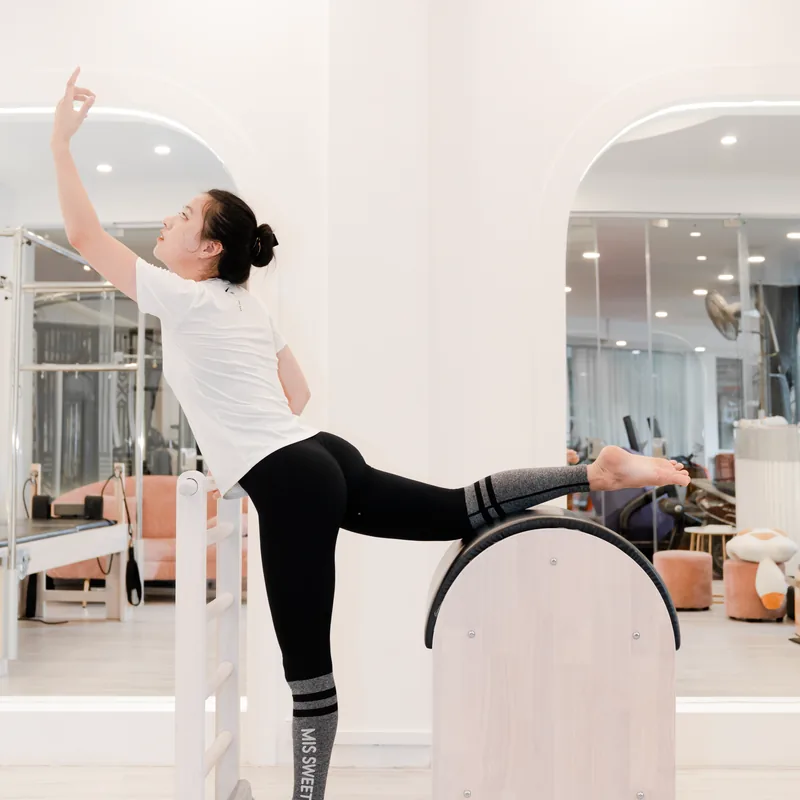
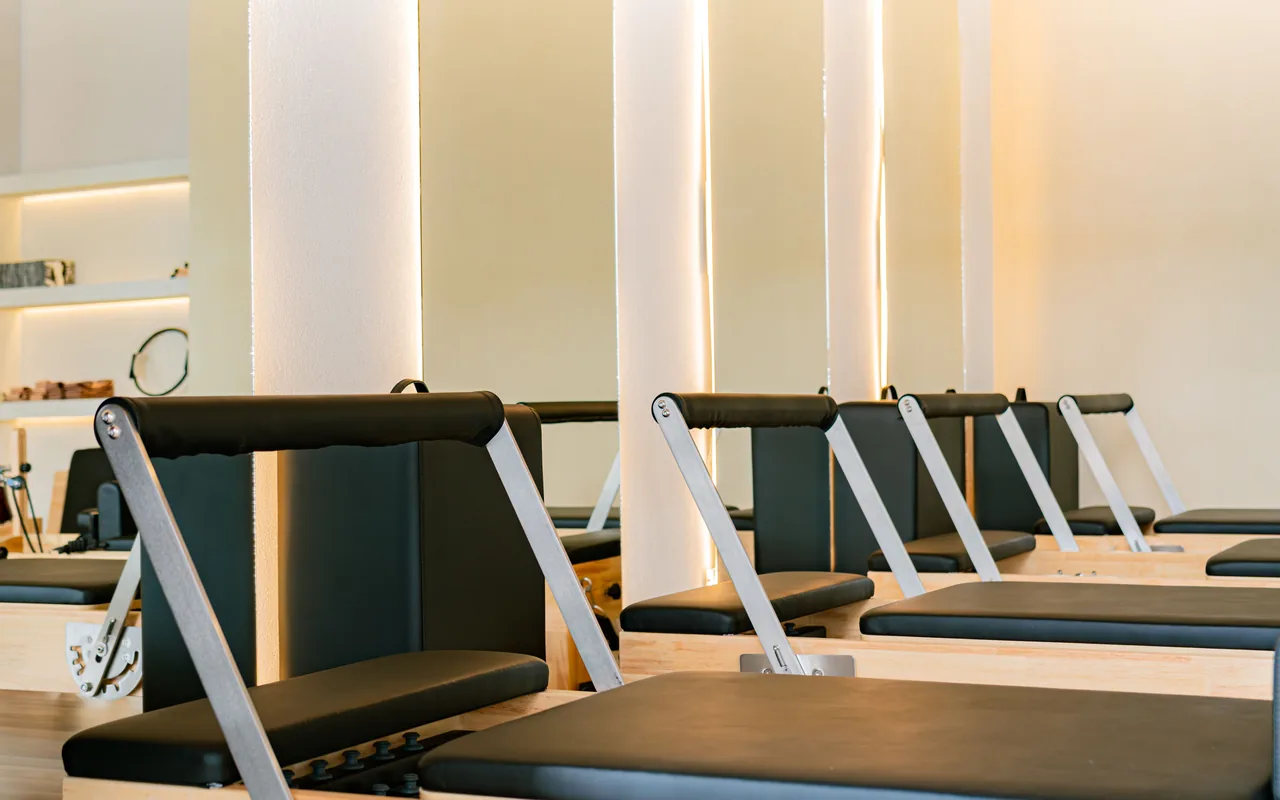
You will be on the machine within four minutes of walking in, and the first thing that happens is that someone sets your springs for you. Nothing about a first class is a test.
The first ten minutes
The coach takes the room through the carriage, the handles and the two settings you will change during the class, then puts you into the first sequence at half the speed you will eventually work at. Expect to be stopped. A first class has roughly twice as many corrections in it as a normal one, and every one of them is about the position of a knee, a rib or a wrist rather than about effort.
By minute twelve your legs will shake. That is not a sign that anything has gone wrong; it is the muscle staying under load for longer than it is used to, which is the entire mechanism the class runs on. Nobody watches, and everybody's legs are doing the same thing.
The shaking is the point. It means the muscle is still under load, which is the only thing the class is trying to achieve.
What to do the day after
Drink more water than usual, walk, and book the next class before the soreness talks you out of it. Most people find the second class easier than the first, not because they are fitter forty-eight hours later, but because they know the order the exercises come in. If you are still sore on day three, take Slow Flow rather than skipping the week.
Book any class marked beginner-friendly on the timetable, and take the intro offer rather than a single drop-in — it covers three classes, which is roughly when the machine stops feeling like a machine.